
Prevent ACH Payout Fraud: How the 2026 Nacha Rule Changes Payment Verification
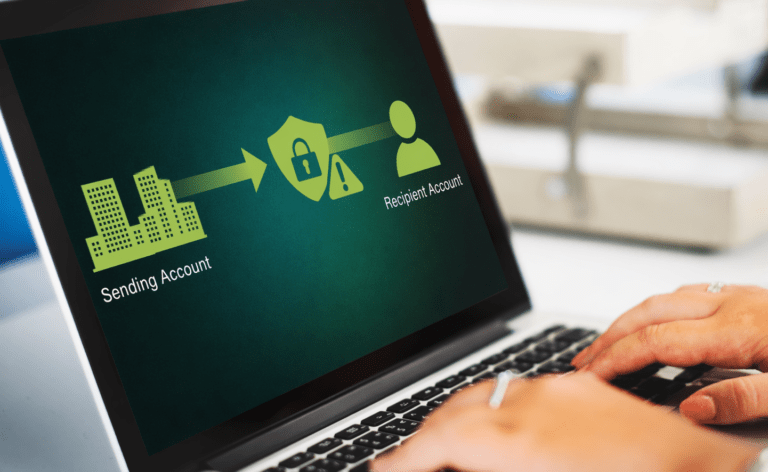
The 2026 Nacha rule requires organizations sending ACH payments to strengthen fraud monitoring. Here’s what the change means and how payment teams can reduce risk before funds are sent.
March 2026
Key Takeaways
- New Nacha rules require organizations that originate ACH payments to strengthen fraud monitoring processes.
- The rule is being implemented in two phases beginning in March 2026.
- Companies sending ACH credits should review how they detect suspicious payment activity and validate payment details.
- Verifying bank account ownership before initiating payments can reduce fraud risk, support stronger ACH controls, and help organizations strengthen compliance without creating avoidable workflow friction.
2026 Nacha Fraud Monitoring Rule — Quick Summary
- Organizations that originate ACH payments must implement risk-based processes to detect potentially fraudulent entries.
- The rule applies to non-consumer originators and third-party service providers.
- Implementation began March 20, 2026, with a second phase beginning June 19, 2026.
Why ACH fraud risk is increasing
ACH payments are widely used for payroll, vendor payments, insurance payouts, refunds, and marketplace disbursements. As ACH volumes continue to grow, fraud targeting these payment flows has increased as well.
Many fraud incidents occur when payments are sent to bank accounts that were never properly verified. This can happen when account details are changed during vendor onboarding, payout setup, or payment updates.
Because ACH payments are often automated and processed in batches, fraudulent account changes may not be detected until after funds have already been sent.
See how Lyons verifies bank account ownership before ACH payments are initiated →
To address rising fraud risks across the ACH network, Nacha has introduced updated rules requiring organizations to strengthen how they monitor outgoing payments.
What the 2026 Nacha rule requires
Nacha governs the Automated Clearing House (ACH) Network, which processes electronic payments across the United States.
Under the 2026 rule update, organizations that originate ACH payments must implement risk-based processes to identify and monitor potentially fraudulent ACH entries.
The rule applies to organizations that send ACH payments as well as third-party service providers that originate payments on behalf of businesses.
These monitoring processes must be designed to detect transactions that may be:
Unauthorized
Initiated under false pretenses
Associated with potential fraud or scam activity
Organizations are also expected to review and update their monitoring processes regularly to address evolving fraud risks.
Who is affected
The rule applies broadly to organizations that originate ACH transactions, including:
Businesses that send ACH payments (non-consumer originators)
Financial institutions that originate ACH payments for their customers
Third-party payment processors, payroll providers, and service platforms
Any organization sending ACH credits, whether for payroll, vendor payments, refunds, or payouts, may need to review its fraud monitoring practices.
Implementation timeline
The rule is being implemented in two phases.
Phase 1 — March 20, 2026
Applies to non-consumer originators and third parties with 2023 ACH origination volume of 6 million or more transactions.
Phase 2 — June 19, 2026
Applies to all remaining non-consumer originators and third-party service providers.
Organizations that originate ACH payments should review their monitoring and validation processes to ensure they align with the updated Nacha expectations.
Where ACH fraud commonly appears
Fraud targeting ACH payments often occurs during moments when account details are created or changed.
Common examples include:
Vendor payment updates – Fraudsters impersonate vendors and request account changes.
Insurance or claims payouts – Payment instructions are modified before disbursements are sent.
Marketplace or platform payouts – Fraudulent accounts are added to receive funds.
Refunds or rebate payments – Payment details are submitted without confirming account ownership.
If account information is not validated before a payment is initiated, organizations may send funds to accounts controlled by fraudsters.
Steps companies can take to prepare
Organizations preparing for the updated Nacha expectations should review several areas of their payment operations. A useful question to ask is: does your current process flag suspicious account changes before the ACH file is generated and funds are sent?
Assess current fraud monitoring processes
Work with risk, compliance, and payment teams to evaluate how outgoing ACH transactions are currently monitored.
Review account validation procedures
Determine whether bank accounts receiving payments are validated before funds are sent.
Evaluate technology and integration requirements
Consider whether existing payment systems support stronger monitoring and validation processes.
Prepare internal teams
Educate finance, operations, and risk teams about the updated requirements and the importance of stronger fraud controls.
Verify bank account ownership before initiating payments
Many organizations are implementing account ownership verification to confirm that the receiving bank account belongs to the intended recipient before funds are sent.
Learn how Lyons verifies bank account ownership before ACH payments are initiated.→
How companies verify account ownership
One of the most effective ways to reduce ACH fraud risk is to verify account ownership before a payment is initiated.
Account ownership verification confirms that:
The bank account is valid and active
The account belongs to the intended recipient
The account information provided matches the owner of the account
This type of verification helps organizations detect fraudulent payment instructions before funds leave their account.
By validating account ownership early in the payment workflow, companies can reduce fraud risk while strengthening ACH monitoring practices.
Prepare for the 2026 Nacha rule changes
The updated Nacha requirements reflect a broader industry shift toward stronger fraud controls in electronic payments.
Organizations sending ACH payments should evaluate whether their current monitoring and validation processes are sufficient to detect fraudulent payment activity.
Strengthening payment verification processes now can help reduce fraud exposure while aligning with the updated ACH monitoring expectations.
Book a demo to see how Lyons helps organizations verify bank account ownership and reduce ACH fraud risk.→