
Are your ACH payments exposed to fraud?
ACH payment risk is easy to overlook, especially when account details are added or changed before funds are sent. A 2026 Nacha rule change makes now the right time to review where your process may be exposed.
- Effective March 2026
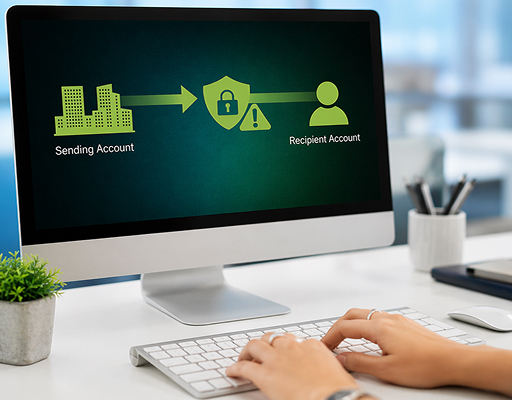
How ACH Fraud Happens
Fraud targeting ACH payments often occurs during moments when account details are created or changed.
Common examples include:
Vendor payment updates
Imposters change vendor bank details before payments are sent.
Customer or payee account changes
Fraudsters change payout details before funds are sent.
New vendor or payee setup
Fake payees are created with seemingly valid bank details.
Claims, refunds, or rebate payments
Payout details change without confirming account ownership.
If account information is not validated before a payment is initiated, organizations may send funds to accounts controlled by fraudsters.
The 2026 Nacha Rule Raises the Stakes
Nacha governs the Automated Clearing House Network, which processes electronic payments
across the United States. Under the 2026 rule update, organizations must implement risk-based processes to identify and monitor potentially fraudulent ACH entries.
Monitoring Requirements
Processes must be designed to detect transactions that may be unauthorized, initiated under false pretenses, or associated with potential fraud. Organizations are expected to update these regularly.
Who is Affected
Applies broadly to organizations originating ACH transactions: businesses sending payments, financial institutions, third-party
processors, payroll providers, and
service platforms.
Implementation Timeline
Phase 1: March 20, 2026
For entities with >6M transactions in 2023.
Phase 2: June 19, 2026
Applies to all remaining
non-consumer originators.
Audit Your ACH Risk Exposure Today
Identify hidden vulnerabilities in your vendor updates and payout workflows to stay ahead of evolving fraud tactics.
How Companies Can Prepare
Does your current process flag suspicious account changes before the ACH file is generated and funds
are sent? Review these key areas of your payment operations.
Assess current fraud monitoring processes
Work with risk, compliance, and payment teams to evaluate how outgoing ACH transactions are currently monitored.
Review account validation procedures
Determine whether bank accounts receiving payments are validated before funds are sent.
Evaluate technology and integration requirements
Consider whether existing payment systems support stronger monitoring and validation processes.
Prepare internal teams
Educate finance, operations, and risk teams about updated requirements.
Verify bank account ownership before initiating payments
Confirm that the receiving account belongs to the intended recipient before sending funds.
How Lyons Helps Verify Account Ownership Before Funds Are Sent
Lyons helps organizations verify bank account ownership before ACH payments are initiated. This helps teams confirm that the account belongs to the intended recipient before funds are sent, reducing fraud risk and strengthening payment controls.
- Verify bank account ownership before ACH payments are initiated
- Reduce exposure to fraudulent account changes
- Strengthen payment controls without adding unnecessary friction
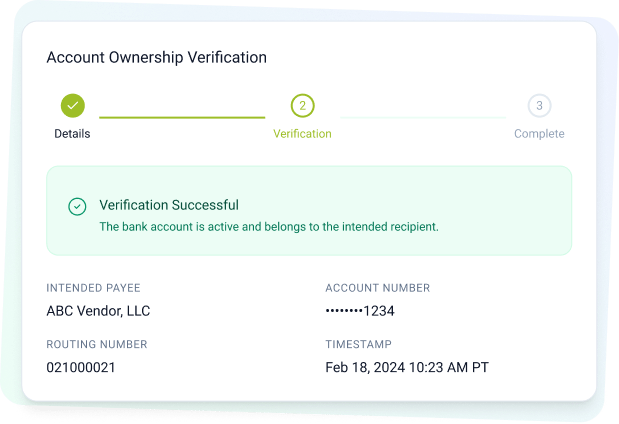
Strengthen Payment Verification Before Funds Are Sent
Evaluate your monitoring and validation processes to reduce fraud exposure and stay ahead of compliance.